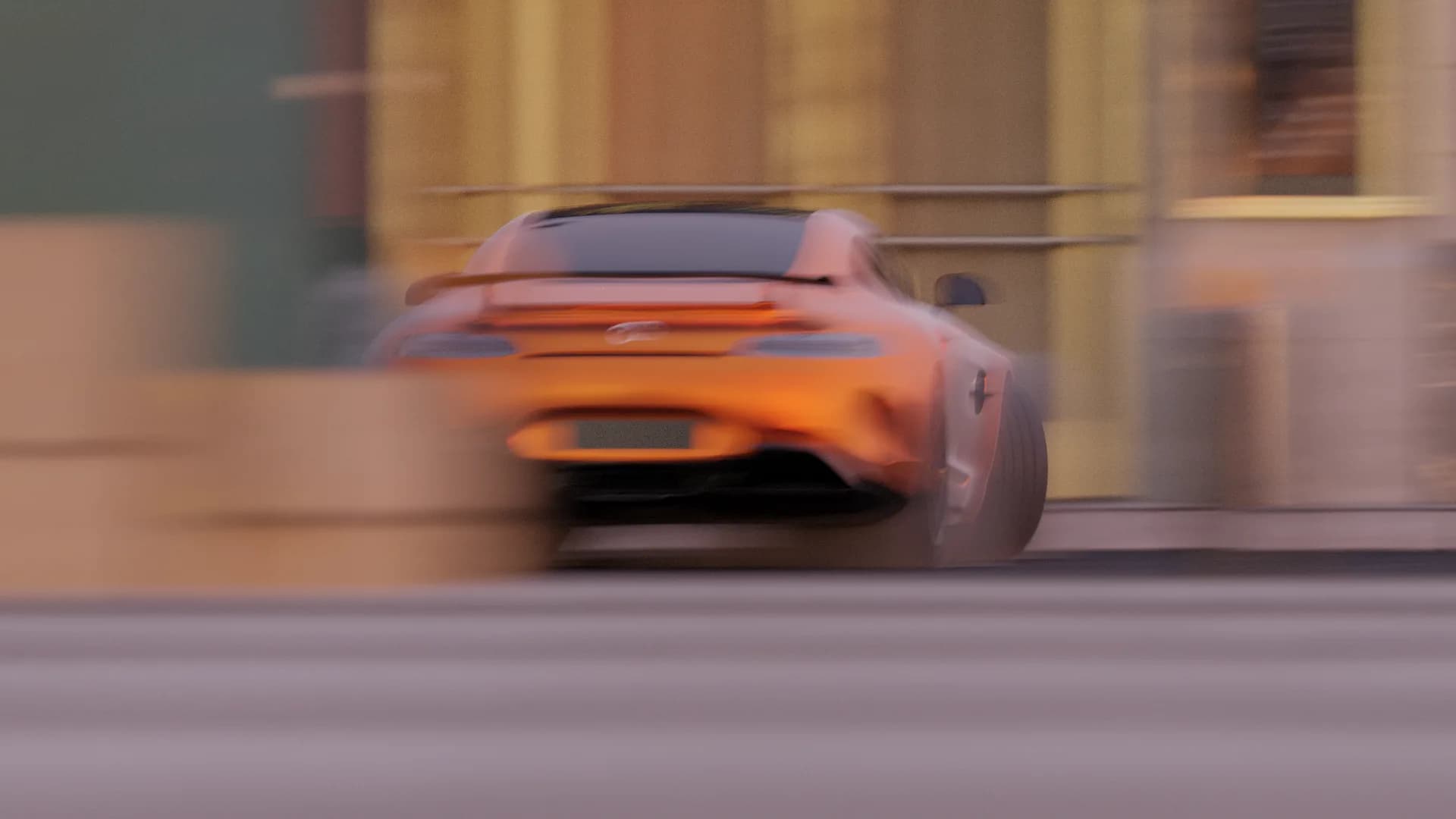
Reverse 180
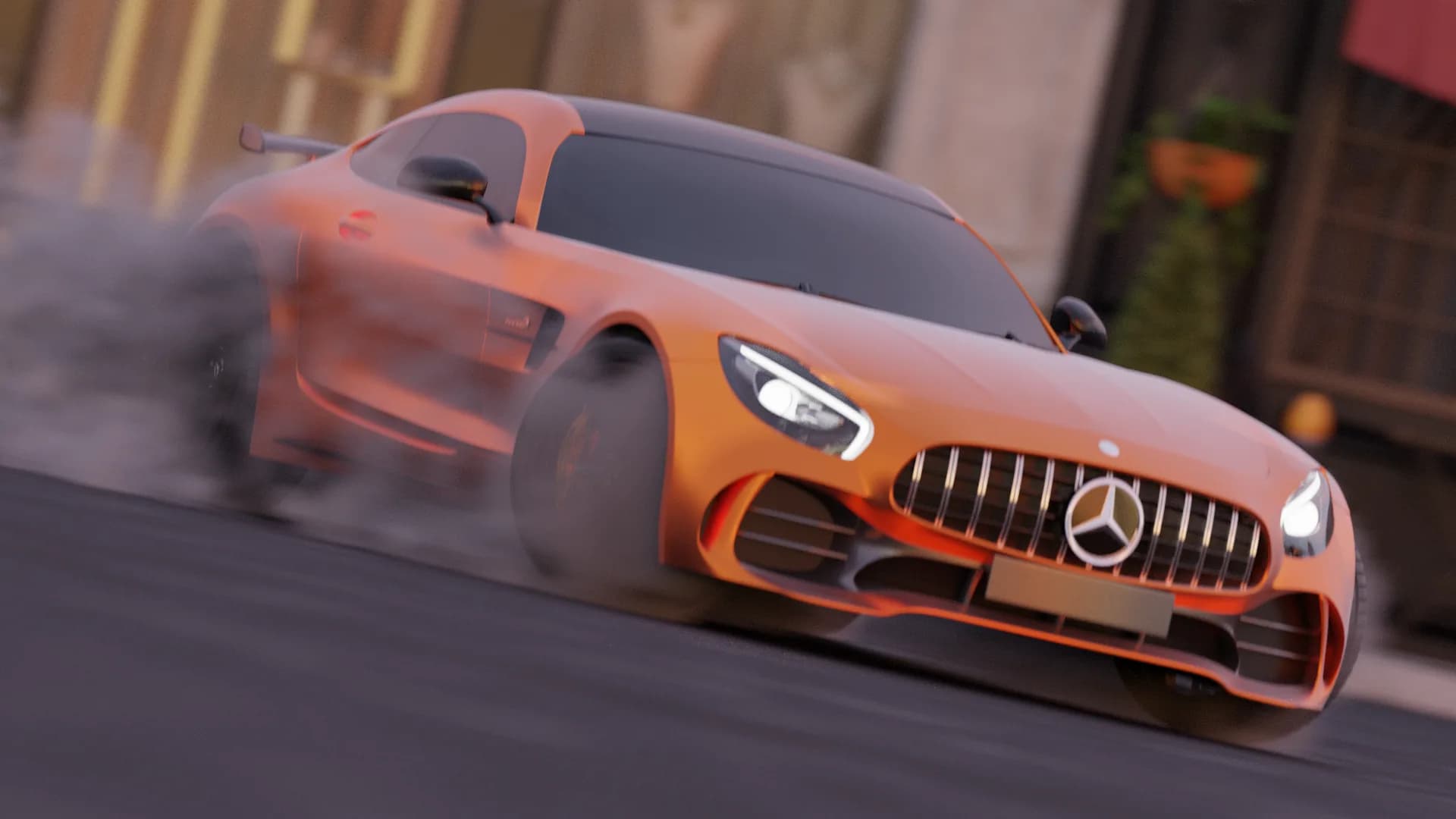
A study on workflow and speed
The reverse 180 was a first attempt at a photorealistic vehicular stunt in 100% CGI — and the first car ever animated here, which matters more than it sounds, because animating a vehicle is mostly a problem of weight rather than a problem of motion.
Every element in the final shot is a 3D element. Not the car composited over a plate: the city buildings, the street poles, the boxes, the trash cans, and the camera move itself, all built in Blender 3.0. That was deliberate. A plate would have made the shot easier and taught nothing, and the question underneath the project was whether the whole frame could be authored rather than captured.
References were Ken Block's Gymkhana films for the driving language and Ready Player One for the way a synthetic camera can be given a physical presence.
The smoke vortex
Smoke coming off a fast-spinning wheel is not a puff of smoke. It is a vortex — the rotation drags air into a spiral, and the shape of that spiral is what reads as spin.
Simulating it directly from the tire geometry does not work. The tire is a torus rotating at speed, and a fluid solver asked to emit from a surface moving that fast produces noise rather than structure — it cannot resolve the emission points between frames.
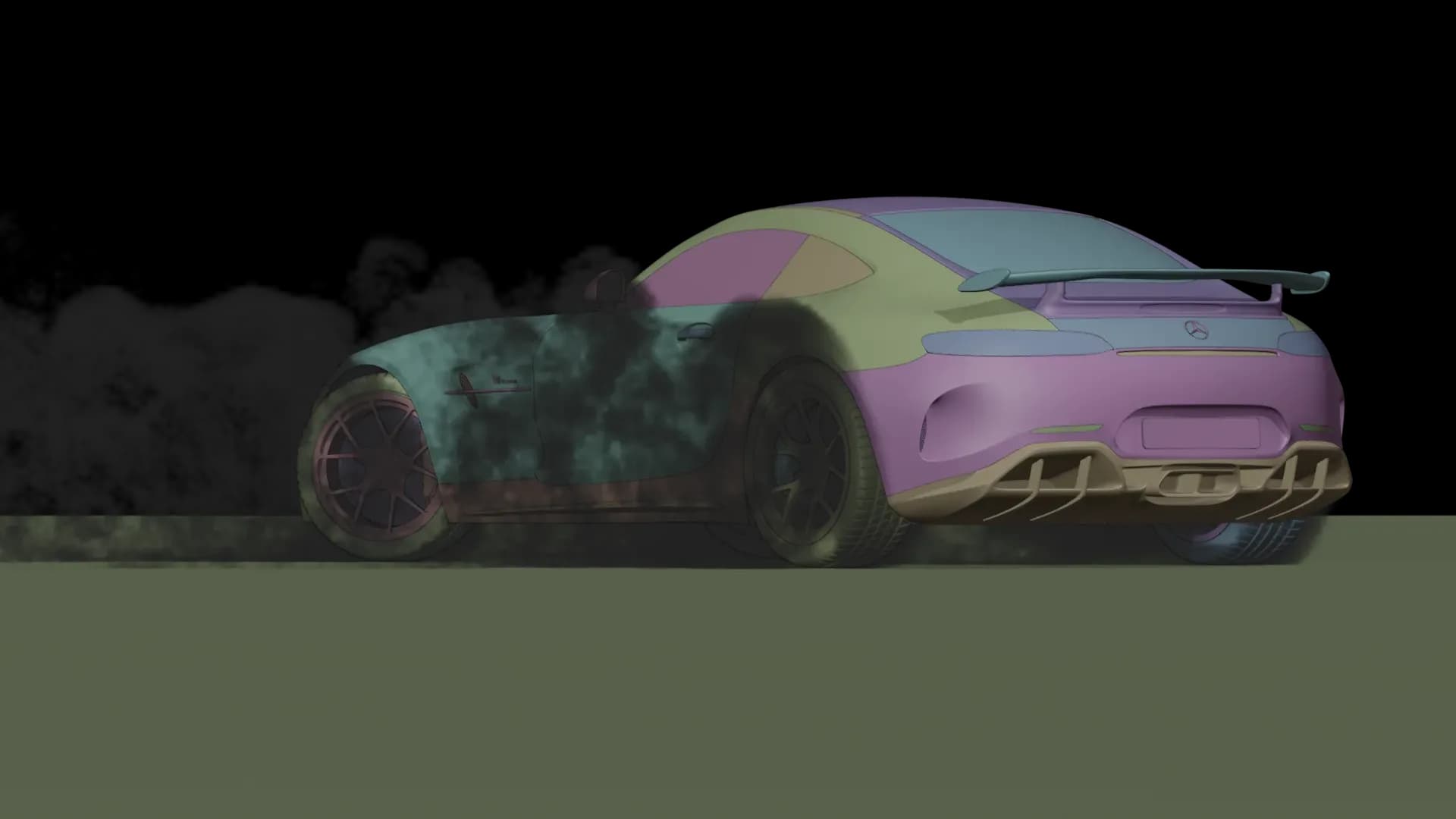
The solution after a week of drafts was to stop emitting from the tire at all, and instead place an invisible cylinder where the tire sits, using it as the emitter. A cylinder is a stable, continuous surface. The solver can emit from it cleanly, and the rotation of the wheel is implied by the vortex rather than computed from it.
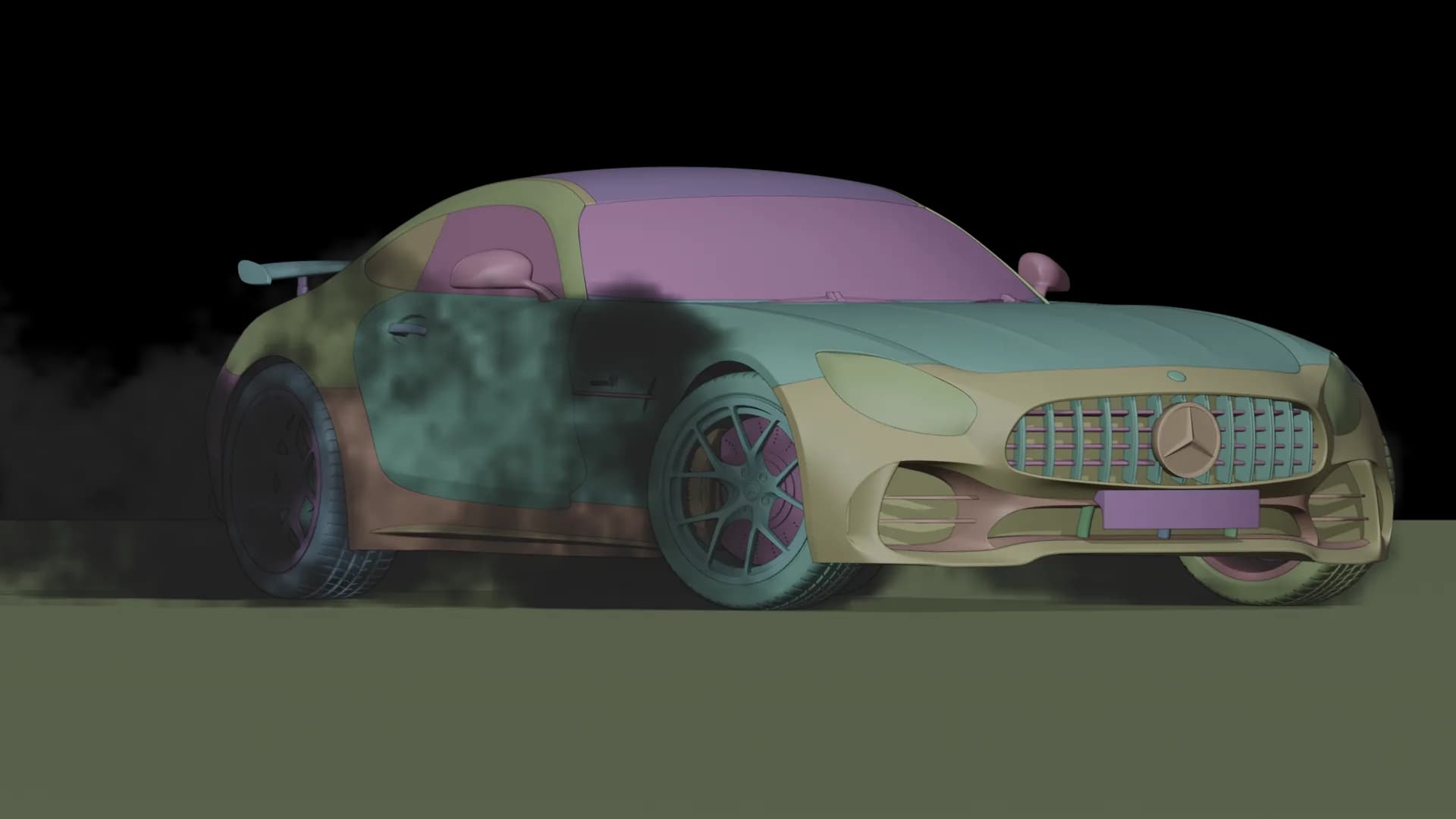
This is a general lesson about simulation and it is worth stating plainly: the thing that emits does not have to be the thing you see. Substituting a simple proxy for a complex surface is often the difference between a solve that converges and one that produces mush.
Why the environment carries the speed
The foreground and background matter more than the car does.
A tight urban street was chosen for two reasons. The first is perceptual: the eye does not read speed from the subject, it reads speed from parallax. Close-proximity obstructions — street poles, boxes, trash cans — leave the frame quickly, and the rate at which they leave is what the viewer measures. The same car moving at the same speed across an empty plain reads as slow, because there is nothing passing to measure it against. Put objects near the lens and the shot accelerates without the car changing at all.
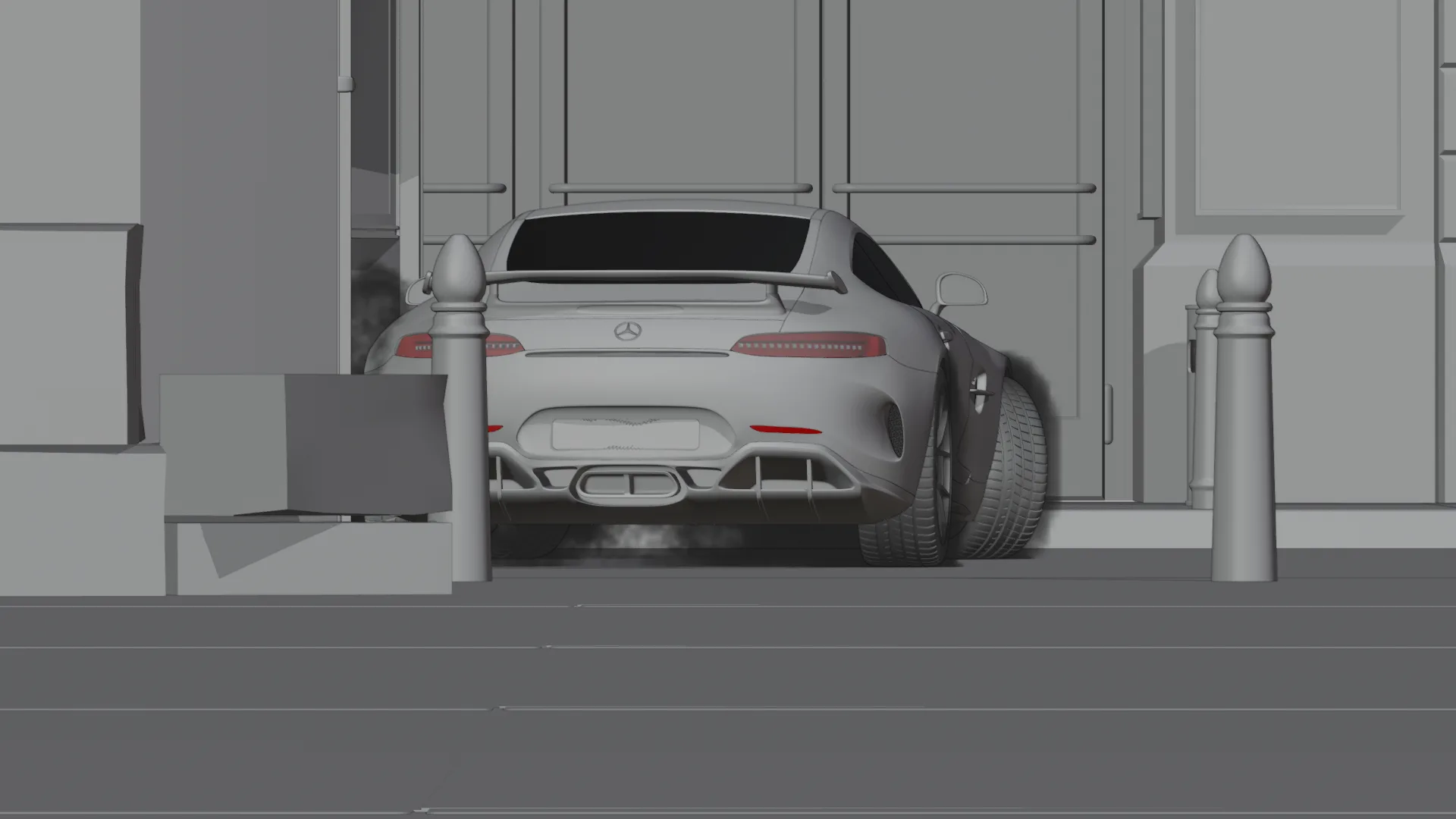
The second reason is practical, and worth knowing if you ever want to make something like this: nobody in their right mind would licence a stunt like that with a car like that. The shot was near-impossible to own. Building it entirely in CG was the only way it could exist.