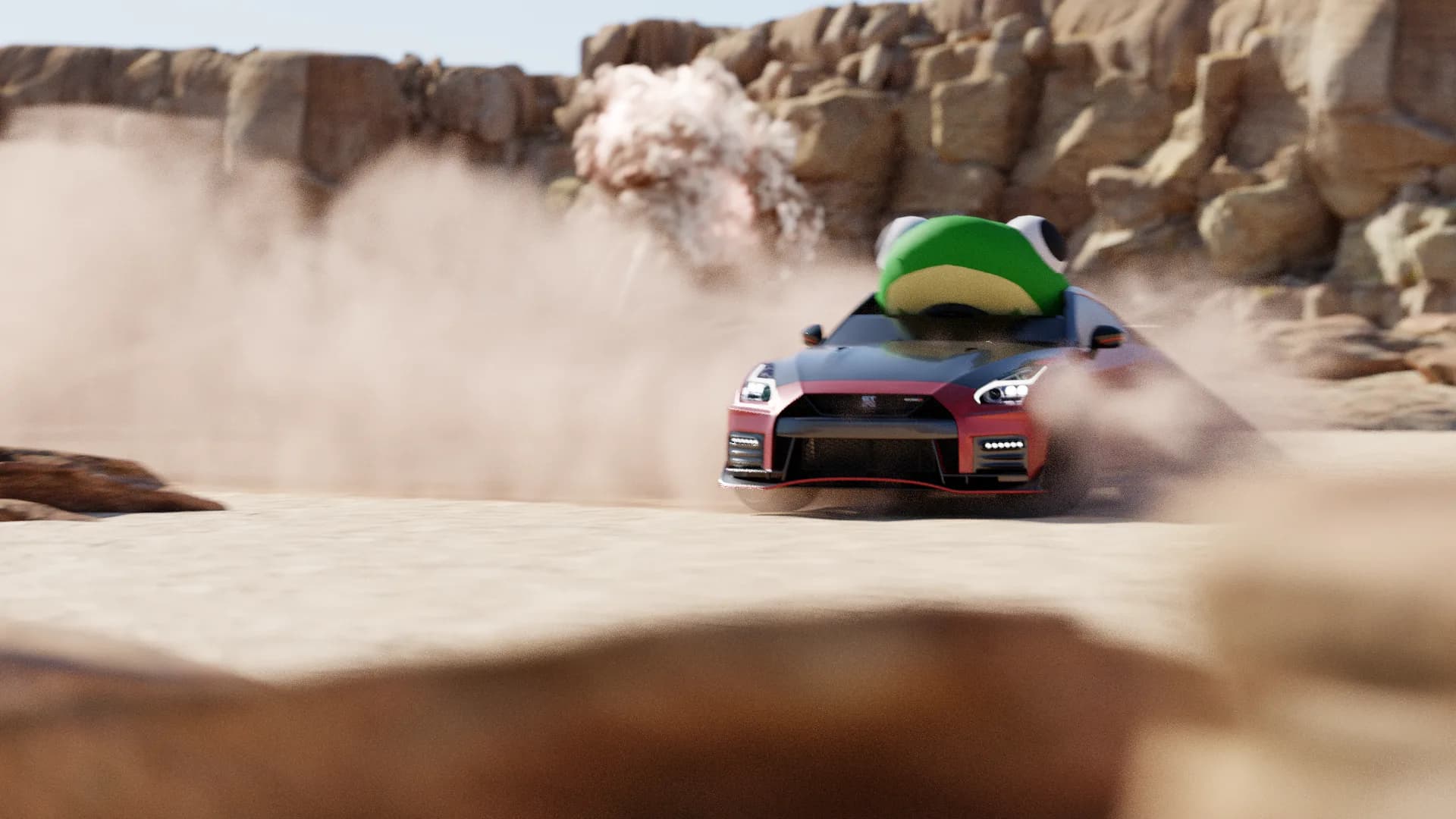
The froggy car
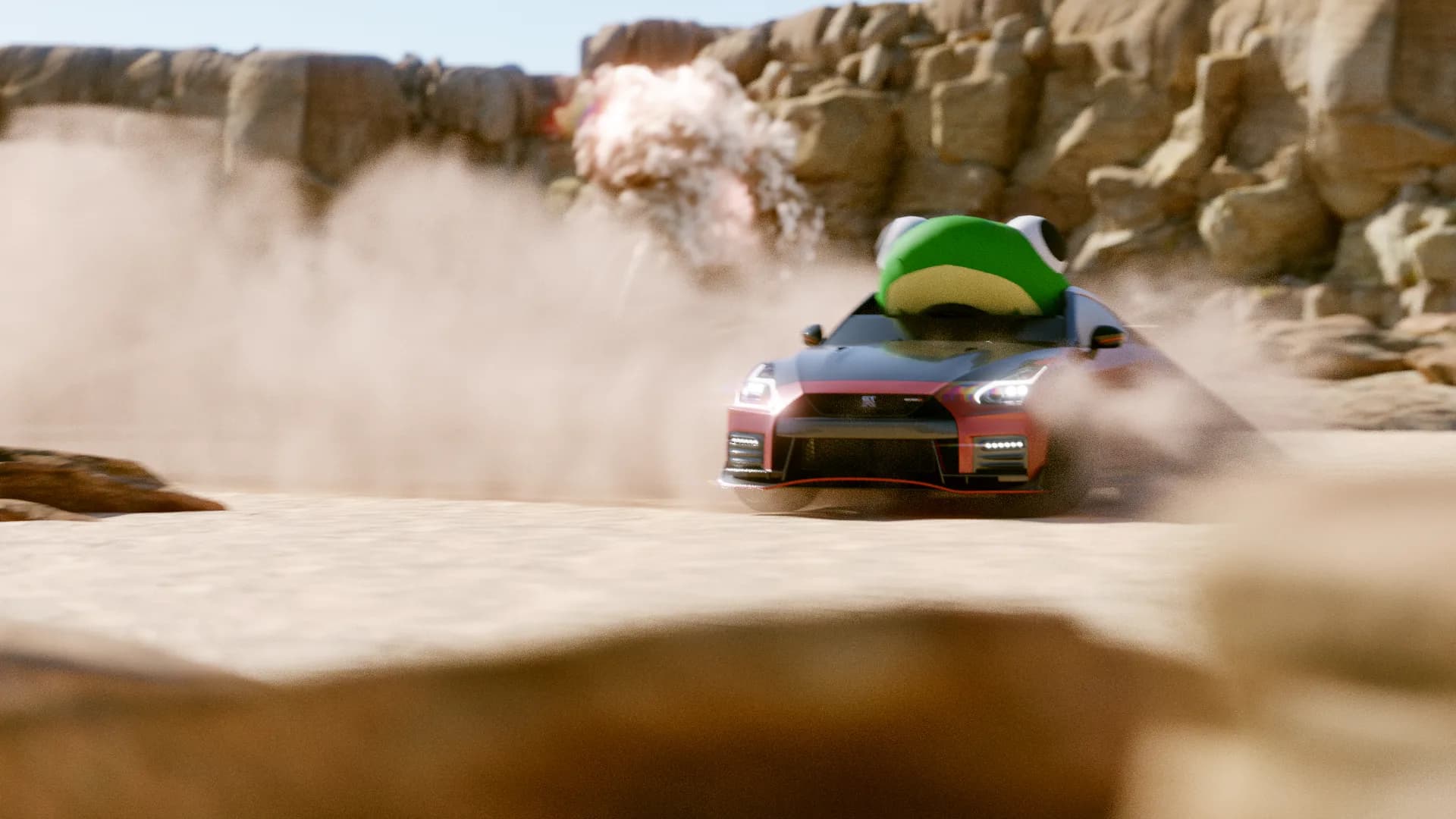
Workflow and speed, part II
After the Mercedes study the question changed. It was no longer whether a typical automotive stunt commercial could be built entirely in CG — that had been answered. It was whether the same photorealistic principles survive an absurd premise.
That distinction matters more than it might seem. Photorealism is usually deployed to make something believable. Point it at something that cannot be believed and you find out which parts of the discipline were doing real work and which were just riding on the audience's willingness to accept a car.
A friend sent over the froggy car from Mother 3, a game I had never played. It was exactly the right premise.
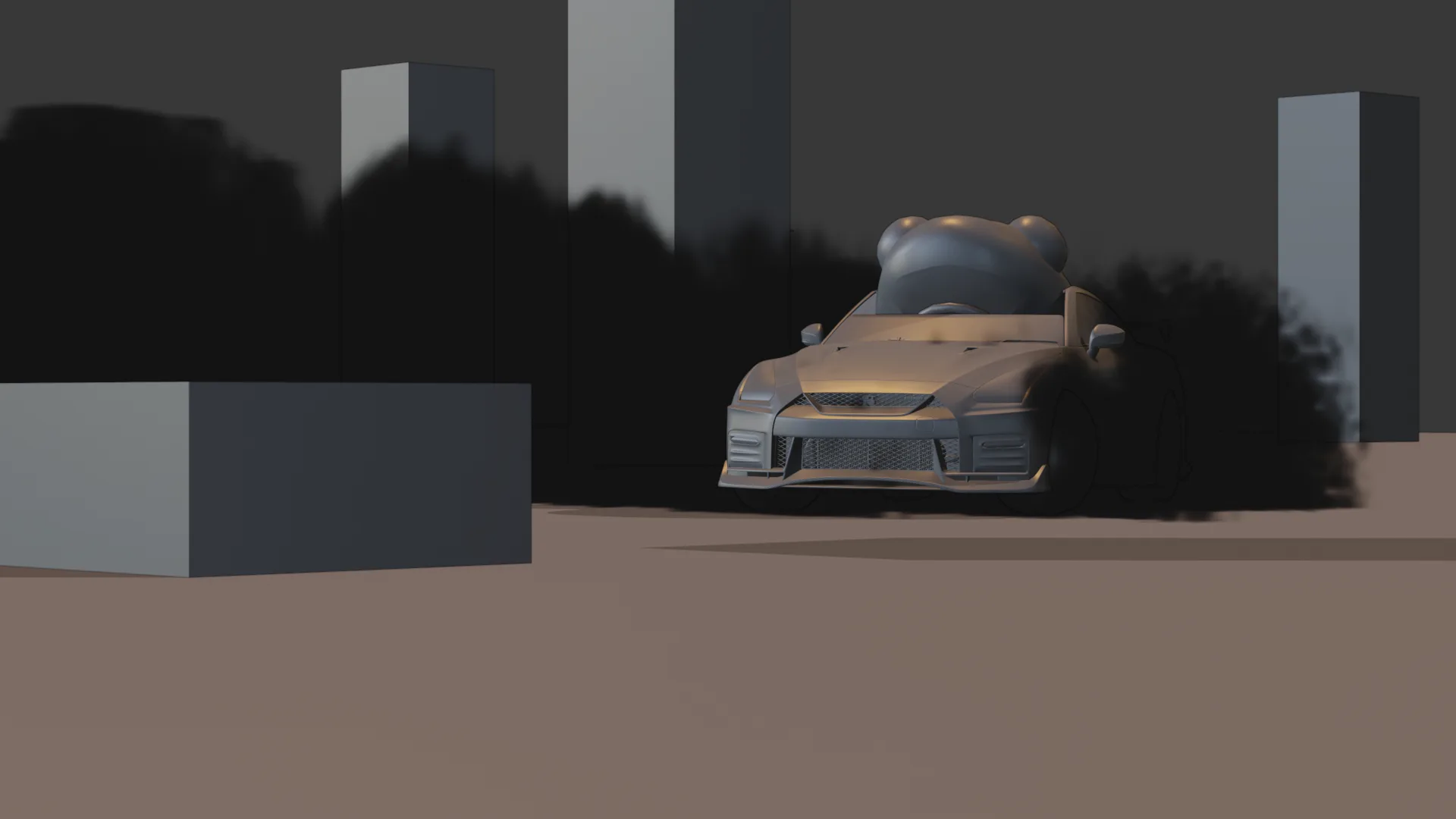
Dust is not smoke
The Mercedes shot was tire smoke off a drift. This one is a desert, and the difference is not cosmetic.
Smoke is buoyant. It is hotter than the air around it, so it rises, and a solver handles it as a gas with lift. Dust is not. Dust is particulate matter heavier than air, kicked mechanically and then falling. It billows outward and settles rather than climbing, and it holds its shape longer because it is not being dispersed by thermal motion.
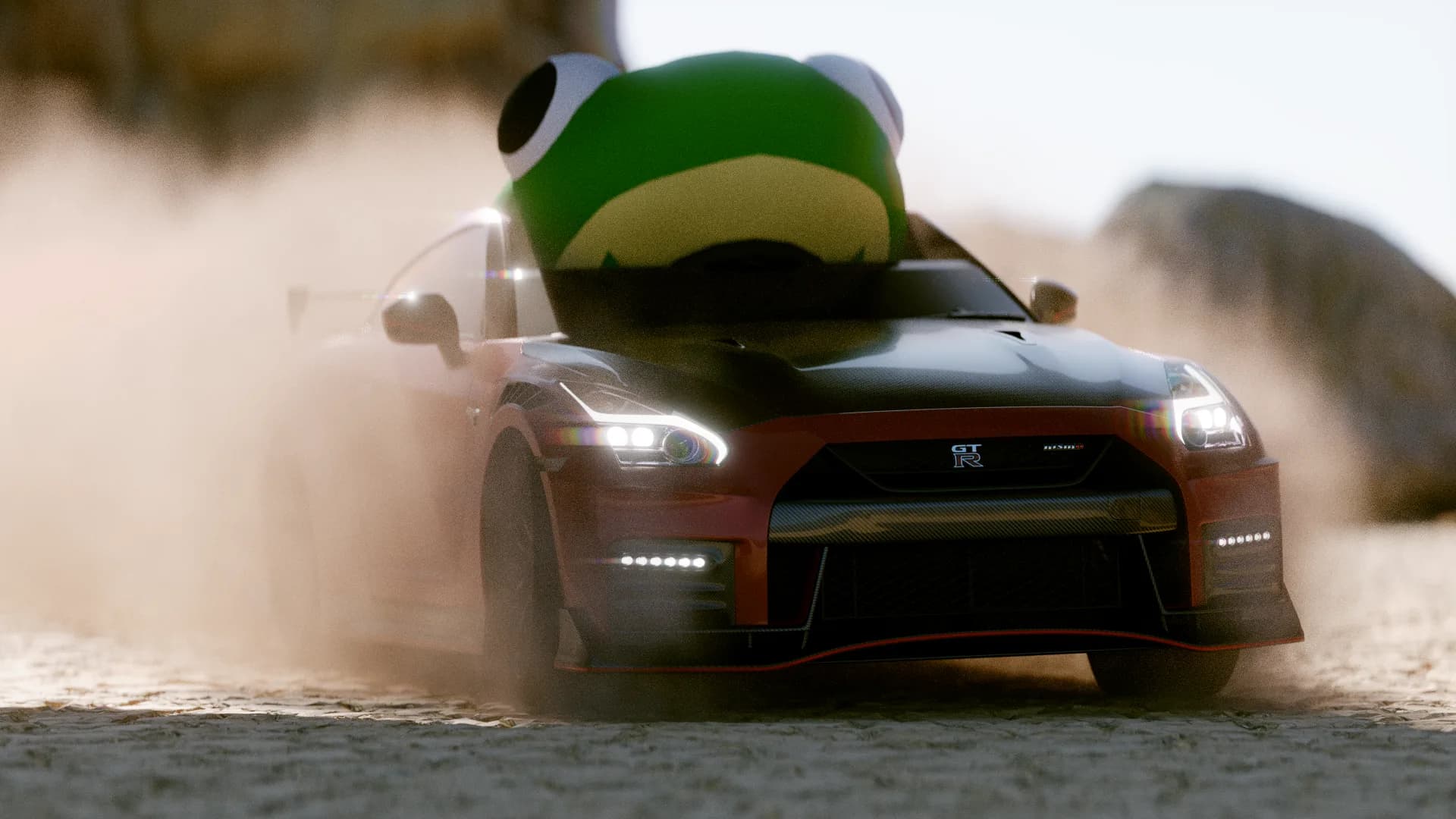
There is a second difference that turned out to matter more. Drift smoke arrives in controlled bursts — the tires break traction, smoke appears, traction returns, it stops. Driving on sand, the tires are kicking up dust *continuously*, for the whole shot.
A continuous emitter is a much harder solve. A burst can be cached, tuned and blended; a continuous one accumulates, and every frame inherits the state of the last. Volume that is never allowed to clear has to be managed — dissipation tuned so it does not fill the frame, and resolution budgeted so the long tail does not become a grey wash halfway through the shot.
Giving compositing an artist's touch
The base render was correct and it was not yet a photograph.
A great deal of attention had gone into the physical movement — the bumps and micro-corrections a real camera operator and a real vehicle would produce. But a renderer produces an optically perfect image, and a perfect image does not look real, because no lens anyone has ever pointed at anything is perfect.
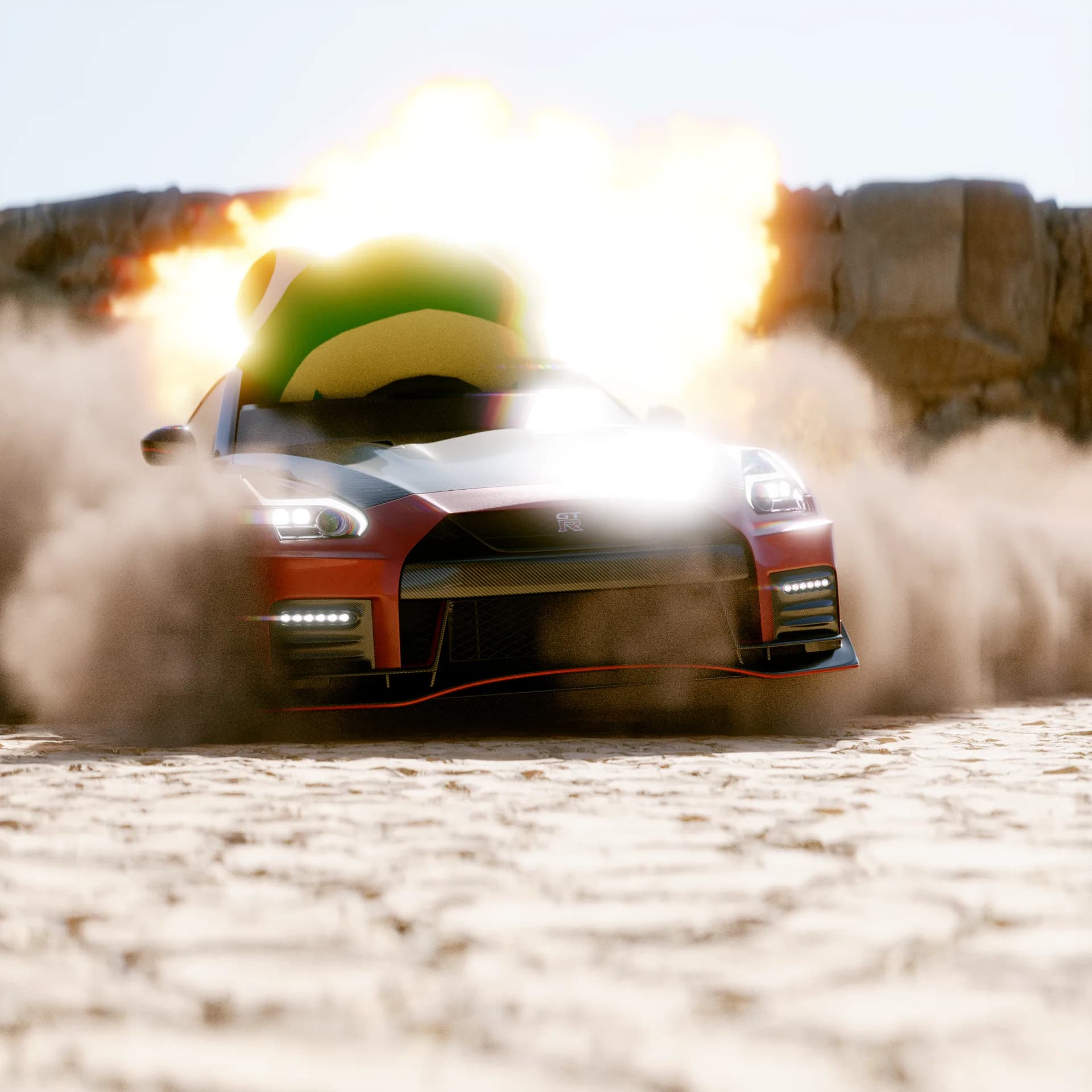
So the finishing phase is a node system built to put the lens back in: chromatic aberration where the glass would separate wavelengths toward the edges of frame, the falloff and vignetting a real optic produces, the small imperfections that a camera cannot help introducing and that the eye has learned to read as *photographed*.
This is the part of the workflow most likely to be treated as a filter applied at the end. It is not. It is the step where the image stops being a render.